
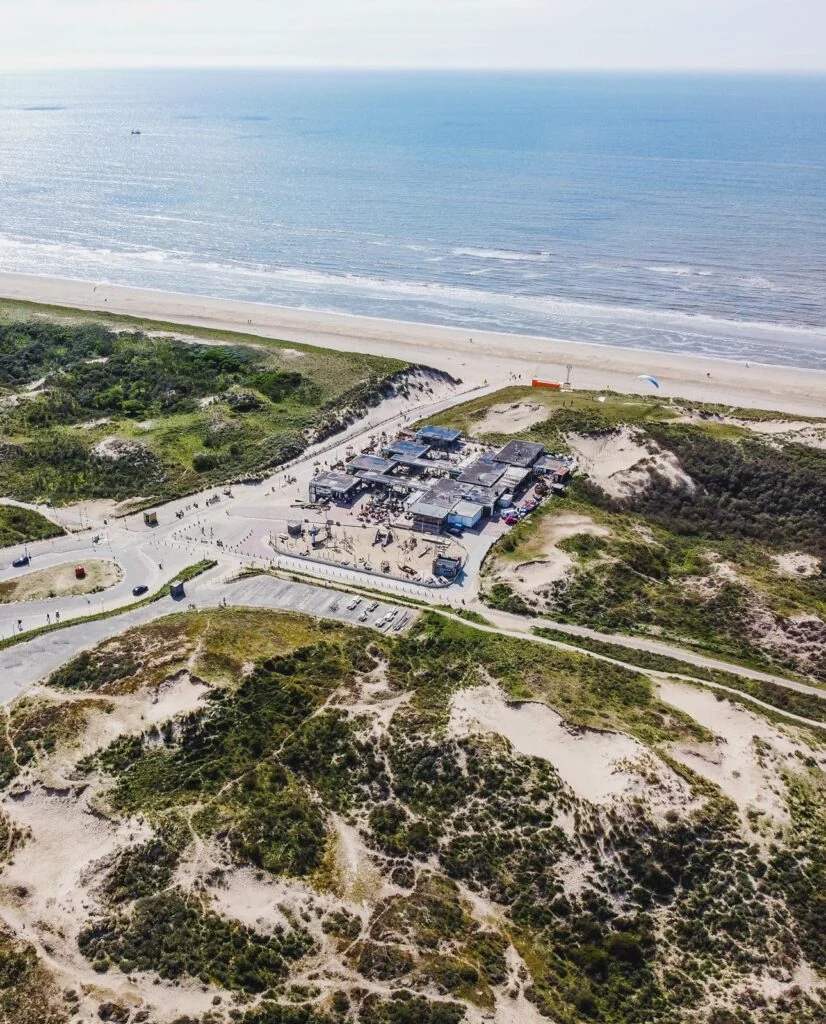
Is Noordvoort worth visiting?
Yes—especially if you enjoy quiet nature and scenic walking. Noordvoort is a protected beach reserve, not a conventional seaside destination. Large wooden posts mark the reserve, while a designated walking route takes you along the outer dune ridge above the beach. This helps birds and seals rest with less disturbance.
Important: swimming, beach games, digging and lounging on the protected stretch are not the purpose of this nature reserve and are restricted. Choose nearby Langevelderslag or Noordwijk Beach for a traditional beach day.
Noordvoort at a glance
Between beach posts 73 and 70
Approximately three kilometres of coastline between Noordwijk and Zandvoort, where South Holland meets North Holland.
Dunes & three viewpoints
A marked, mostly sandy dune path gives wide views across the North Sea, the beach and the protected inland dune landscape.
Bring what you need
No beach clubs, toilets, shops or litter bins inside the reserve. The Langevelderslag entrance has food and visitor facilities nearby.
Where exactly is Noordvoort?
Strandreservaat Noordvoort occupies the quiet stretch of coast between beach marker 73 at the Noordwijk end and beach marker 70 towards Zandvoort. It sits north of the busy Noordwijk boulevard and south of the built-up Zandvoort beach. The nature reserve spans both provincial coastal landscapes and has been developed as a place where natural processes come first.
There is no road, seafront promenade or car park directly at the reserve. Instead, visitors arrive on foot or via connecting paths from the dune cycle route. The wooden marker posts on the beach signal the transition into the protected area. They also point towards the special route along the zeereep—the outermost dune ridge.
How to walk to Noordvoort from Langevelderslag
Langevelderslag is the most practical southern starting point. It has parking, a beach entrance, bicycle access and places to eat after a walk. Once you step onto the beach at access 27, head north—towards Zandvoort and away from central Noordwijk.
- Start at Langevelderslag: use the beach entrance beside the facilities and follow the shoreline north.
- Walk approximately 1.25 km to the reserve boundary: a row of substantial wooden posts near beach marker 73 indicates the start of Noordvoort.
- Follow the marked route up onto the outer dunes: the full reserve path extends for approximately three kilometres and is largely sandy, with some climbs and exposed sections.
- Stop at the viewpoints: look out towards the shore for resting birds or occasional seals without approaching them.
- Plan your return: walk back the way you came, use authorised connecting paths to the inland cycle route, or continue towards Zandvoort if you have arranged your onward journey.
Walking the entire dune route and returning to Langevelderslag is a substantial outing rather than a short beach stroll. You can also enjoy a shorter walk to the first viewpoint. Exact distances and conditions depend on your chosen paths, wind and soft sand.
Discover Noordvoort's three viewpoints
The viewpoints are one of the highlights of Noordvoort. Along the dune route, travelling from Noordwijk towards Zandvoort, you encounter three recognised stops. Their elevated position lets you experience the coast without disturbing wildlife on the beach.
Juttersplek
Approximately one kilometre after entering the reserve from the south, the Juttersplek celebrates the character of this coast and offers views over the sea and shore.
Theaterzit
About 600 metres farther, this distinctive seating and viewing area lies at the provincial border between South Holland and North Holland.
Het Vizier
Around one kilometre after Theaterzit, Het Vizier offers another panoramic stop before the northern end of the reserve near beach marker 70.
Distances are approximate and refer to the marked dune route. Look for signs and wooden posts rather than relying only on your phone's map. Clear weather can offer spectacular views, but even on cloudy days the landscape is memorable.
Can you visit Noordvoort by bicycle?
Yes—but cycle to the reserve, not through it on the beach. A dune cycle route connects the Langevelderslag area with Zandvoort. Near Noordvoort there are bicycle parking spots and three connecting footpaths leading to the viewpoints; the walk from the cycle path to a viewpoint can be as short as roughly 250 metres.
This is a good alternative if you do not want to walk the entire beach approach. A short loop using two viewpoints and the inland cycle path is roughly 2.5 km on foot. Leave the bike in the designated place and follow the permitted walking paths. Cycling or mountain biking across the protected Noordvoort beach is not allowed.
From the Zandvoort end, the walk to the northern reserve boundary is approximately four kilometres from the station area along the coast. For walkers looking for a long coastal day, the route from Langevelderslag towards the southern Zandvoort boulevard is around 8.5 kilometres one way, including the dune diversion through Noordvoort.
Birds, seals and other wildlife to look for
Noordvoort was created to give coastal wildlife a more peaceful place to rest, feed and potentially breed. Depending on the season, you may see shorebirds such as oystercatchers, sanderlings, gulls and terns on or above the sand. In the dunes, look and listen for meadow pipits, stonechats and other songbirds.
Seals sometimes rest on the shore, but sightings are never guaranteed. If you are fortunate enough to see one, watch from a generous distance. Do not approach it for photographs, allow a dog to get near it or try to move it into the sea. A resting seal is not necessarily injured.
Landward views may reveal deer, and in sunny conditions the dune vegetation provides habitat for insects and reptiles such as sand lizards. Binoculars or a zoom lens make watching wildlife much more rewarding than moving closer.
Why the dunes here are so special
The landscape may appear wild, but Noordvoort is also a carefully managed coastal restoration project. In parts of the outer dune ridge, vegetation was reduced and small wind-blown hollows were created. This allows sand carried by the wind to move inland again, instead of being trapped by a completely fixed grass-covered ridge.
That movement of sand—known as dynamic coastal management—supports a more varied landscape and helps the dune system adapt over time. Plants adapted to salty, sandy conditions, including sea rocket, sea holly and sea spurge, can thrive in the exposed environment. The dunes are also an important part of the Dutch coast's natural flood defence.
The nature reserve was officially opened in 2019, following cooperation between coastal authorities, local municipalities and nature organisations. Its quieter beach and unusual dune walking route are both part of the same conservation idea.
Rules visitors should know before entering
The protected status is not just a label. The reserve is intended primarily for quiet passage and wildlife observation. To help preserve the area:
- Use the marked dune walking route between the large wooden boundary posts, and respect nature signage or temporary restrictions.
- Keep dogs on a lead all year, both on the beach and on permitted dune paths; never let a dog chase birds or seals.
- Do not swim in the protected reserve. This is not a designated recreational swimming beach.
- Do not settle in for beach recreation such as sunbathing, games, digging holes or making sandcastles in the reserve.
- Do not cycle or mountain bike along the protected beach; use the inland cycle route.
- Do not approach wildlife, cross closed areas, light fires or leave rubbish behind.
Regulations differ on beaches immediately north and south of Noordvoort. Follow the current information boards, and check the official Noordvoort visitor rules before setting out.
Are dogs allowed at Noordvoort?
Yes, provided they remain on a lead. This applies throughout the reserve, including on the beach and on permitted paths along the dune ridge. Loose dogs can easily startle resting seabirds and seals, which is why year-round restraint is important here.
If your main goal is a carefree dog walk or a place to throw a ball, another designated section of the Noordwijk coast will suit you better. Remember that the rules can change between nearby beach zones and seasons.
Parking, toilets and other practical facilities
There is no parking or visitor centre inside Noordvoort itself. If arriving by car, use the main paid parking area at Langevelderslag 20, 2204 AH Noordwijk. From there, continue on foot through beach access 27 and head north along the shore.
Published municipal parking rates for the Langevelderslag area include €0.10 per five minutes during the first two hours and €0.10 per two minutes after that. Day tickets have been listed at €10 between 1 April and 30 September and €5 between 1 October and 31 March. Rates may change: check the parking machine for the price on the day of your visit.
Toilets, refreshments and visitor facilities are found around the Langevelderslag beach entrance, not along the reserve path. The municipality is redeveloping the Langevelderslag entrance in phases, with improvements planned through spring 2027, so access and available facilities may change temporarily. Bring your own water and take litter home—there are no bins in Noordvoort.
Where to eat near Noordvoort
There are no cafés, restaurants, shops or beach pavilions inside the protected reserve. The nearest convenient cluster of food and drink is back at Langevelderslag. That makes it sensible to enjoy coffee or lunch before your walk—or plan a relaxed meal afterwards.
Nederzandt
A popular full-service restaurant by the Langevelderslag beach entrance, suited to lunch, dinner or a warm drink after a windy coastal walk.
Buhay Beach
One of the food options near the beach access. Check opening times before planning a stop outside the main beach season.
Hoogies & Bella Bella
Further choices around Langevelderslag for a snack, something sweet or an easy bite before heading home.
See the complete Langevelderslag visitor guide for more on restaurants, parking and the family-friendly facilities in this area.
Is Noordvoort suitable for families and visitors with limited mobility?
Noordvoort can be a wonderful outdoor adventure for older children who enjoy walking and wildlife. Look for birdlife from the viewpoints, talk about how the dunes protect the Netherlands and turn the walk into a nature-spotting trip. Because visitors are encouraged to keep moving through the reserve, it is less appropriate for building sandcastles or a full day playing on the beach.
The dune route involves loose sand, uneven ground and some steep sections. It is not suitable for standard wheelchairs or pushchairs, and people who find sandy slopes difficult may prefer to enjoy the sea at the more accessible Langevelderslag beach entrance. The entrance is being improved, but these works do not turn Noordvoort's dune trail into an accessible paved path.
When is the best time to visit?
Spring: combine flowering fields and Keukenhof with a refreshing coast walk. Birds may be nesting, so keeping to the path and avoiding disturbance matters especially.
Summer: long days and evening light make the viewpoints attractive. Sunny weekends can be busy at Langevelderslag even if Noordvoort itself feels much quieter.
Autumn: migrating birds, dramatic skies and changing dune vegetation provide excellent opportunities for birdwatching and photography.
Winter: the coast is peaceful and atmospheric, but strong winds, short days and wet sand make weatherproof clothing essential.
For photography, softer morning or late-afternoon light often shows the dune contours beautifully. Conditions on this open coast can change quickly: check the forecast and return route before leaving the main beach entrance.
What should you take with you?
- Comfortable shoes with grip for deep sand and uneven dunes.
- Drinking water and a small snack; there are no shops within the reserve.
- A windproof jacket and an extra layer, even when it feels mild inland.
- Binoculars or a camera with zoom for watching wildlife from a distance.
- A fully charged phone and a plan for returning to your starting point.
- A lead for dogs and a bag to take all waste back with you.
Combine Noordvoort with Keukenhof and the tulip fields
Noordvoort offers a striking contrast with the colourful, busy gardens at Keukenhof. A good spring itinerary is to visit the gardens in the morning, explore the tulip landscape and then head towards Langevelderslag for a walk to the reserve. Eat near the beach entrance before returning to your accommodation.
Allow enough time to explore without rushing. If you only have 30–45 minutes at the coast, Langevelderslag itself is a much easier choice. If you want cafés and a bustling boulevard, choose Noordwijk aan Zee or Zandvoort instead.
Frequently asked questions about Noordvoort
Is Noordvoort free to visit?
Yes, there is no admission ticket for the nature reserve. If you park at Langevelderslag, paid parking applies.
How far is Noordvoort from Langevelderslag?
The southern reserve boundary is approximately 1.25 km north along the beach from Langevelderslag. The marked reserve path itself is approximately three kilometres long.
Are dogs allowed in Noordvoort?
Yes, dogs may accompany visitors on the beach and permitted dune paths, but they must be kept on a lead throughout the reserve.
Can you swim or sunbathe at Noordvoort?
No. Swimming is prohibited in the protected reserve, and lingering beach recreation is restricted. Use a conventional beach outside the reserve for swimming and sunbathing, subject to local safety rules.
Are there restaurants or toilets at Noordvoort?
No. There are no food outlets, public toilets or bins along the reserve. Facilities and restaurants are available in the Langevelderslag entrance area, subject to opening times and ongoing works.
Can I reach a viewpoint without walking all three kilometres?
Yes. Follow the designated dune cycle route and use one of the pedestrian links to the viewpoints. Some viewpoints are about 250 metres from the bicycle route.
Can you see seals at Noordvoort?
Sometimes. Seals may rest on the shore, but sightings are not guaranteed. View wildlife quietly and at a substantial distance.
Can I drive directly to Noordvoort?
No. There is no road access or parking within the reserve. The main southern starting point is Langevelderslag, where you can park and continue on foot.
Official information and visitor updates
Protected-area rules, parking charges and construction work can change. For the latest information, refer to the official Noordvoort FAQ, the municipality's beach dog regulations and the Langevelderslag redevelopment updates.