
Tulip planting in 30 seconds
When should you plant tulip bulbs?
Tulip bulbs are normally planted in autumn, after the soil has cooled but before it becomes permanently frozen. In many temperate climates this means roughly October through December. November is a particularly common time to plant tulips in the Netherlands and nearby countries.
There is usually no need to rush tulips into warm soil in early autumn. Planting a little later helps the bulbs begin their winter rest under cooler conditions. The exact timing depends on your climate and local weather.
Living in a warm-winter climate? Tulips need a sustained cold period to flower well. Gardeners in mild climates may need pre-chilled bulbs or locally adapted planting advice.
Where is the best place to plant tulips?
Choose a place that gets plenty of light and drains freely after rain. Tulip bulbs dislike sitting in waterlogged ground for long periods.
Sun is best
A sunny or lightly shaded position helps tulips grow strongly and produce good flowers.
Good drainage
Loose, free-draining soil is important. Improve very heavy soil or consider a raised bed or container.
Plant in groups
Clusters of 7, 10, 20 or more bulbs usually create a stronger visual effect than isolated single tulips.
How deep should you plant tulip bulbs?
A useful general rule is to plant the bulb at a depth of around two to three times its own height. For many standard tulip bulbs, that works out at roughly 10–15 cm deep.
Place the bulb with the pointed tip facing upwards and the flatter root plate facing down. If a bulb ends up slightly sideways, do not panic: the shoot will still grow towards the surface.
How far apart should tulip bulbs be?
In a garden border, leaving around two bulb-widths between tulip bulbs is a practical starting point. If you are creating a temporary spring display in a pot, the bulbs can be placed much closer together as long as they are not tightly crushed against each other.
For a more Dutch-looking display, plant in generous groups rather than a neat line of single bulbs. Repeating the same variety in a larger patch often creates the strongest colour effect.
How to plant tulip bulbs step by step
Choose the spot
Find a sunny position with soil that does not stay soggy after rain.
Prepare the soil
Loosen compacted ground and remove large weeds, roots and stones.
Dig the hole
Aim for a planting depth of roughly two to three times the height of the bulb.
Point upwards
Place each bulb with the pointed tip facing up and root plate facing down.
Cover gently
Backfill with soil without crushing or heavily compacting the planting area.
Water if dry
Water after planting when the soil is dry, then let normal autumn and winter weather do the rest.
See how flower bulbs are planted
Prefer to see the process? Watch this practical planting video before you start.
How to plant tulip bulbs in pots
You do not need a large garden to grow tulips. They work very well in patio pots, balcony containers and large planters.
Choose a container with drainage holes, use a free-draining potting mix and avoid allowing the pot to sit permanently in a saucer full of water. Tulip bulbs in containers can be planted closer together than bulbs in a permanent garden border.
Container tip: A larger, deeper pot is more forgiving than a tiny pot because it holds a more stable amount of moisture and gives the roots more room.
What is bulb lasagna planting?
Bulb lasagna planting is a clever way to grow several types of spring bulbs in layers inside one container. The name comes from the stacked layers: larger bulbs are planted deeper in the pot and progressively smaller bulbs sit above them.
By choosing bulbs that flower at different times, one pot can deliver several waves of colour from early spring into the tulip season.
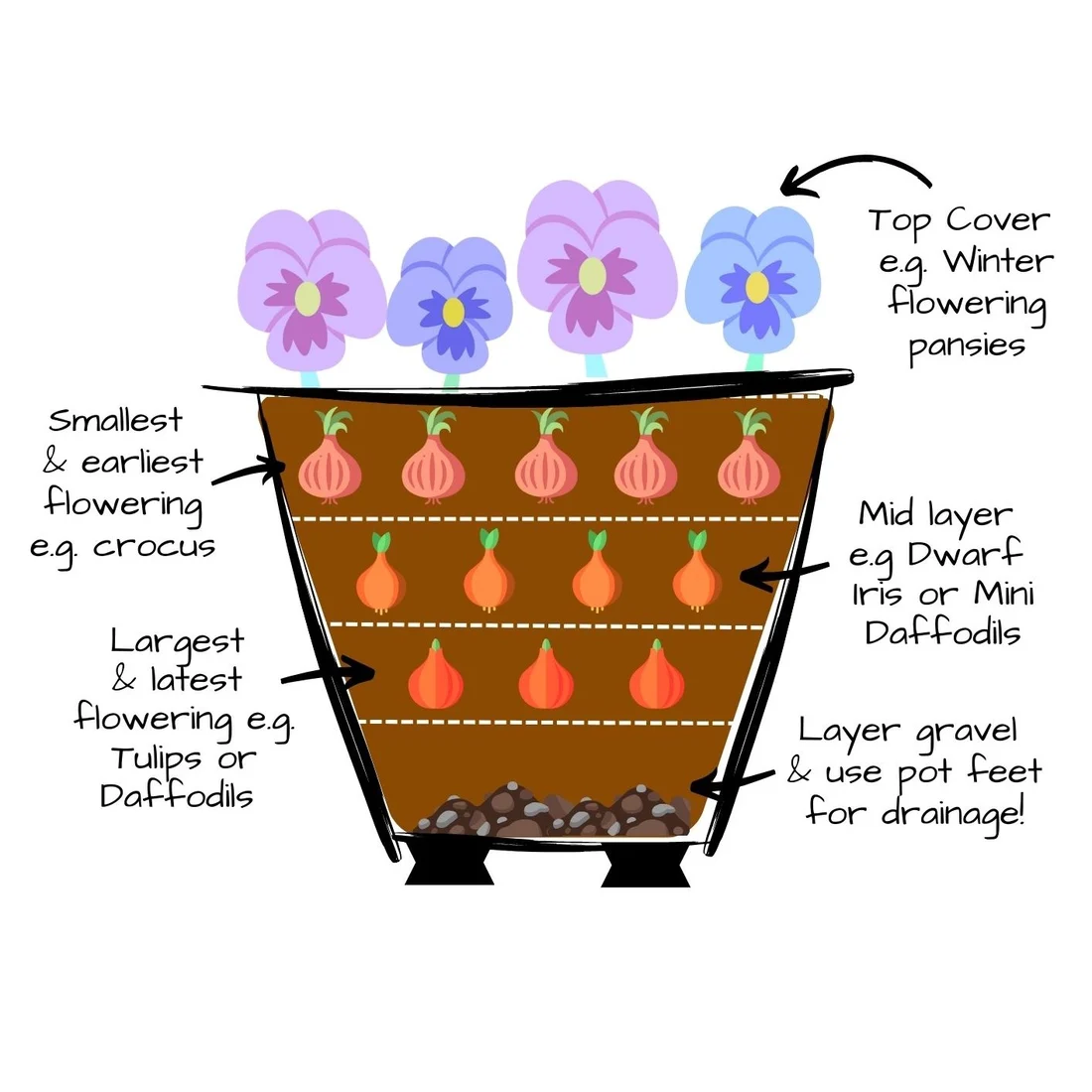
How to make a bulb lasagna
Crocus, grape hyacinth or other small spring bulbs, followed by a final layer of compost. You can add pansies or violas on the surface for winter colour.
Miniature daffodils, dwarf iris or hyacinths work well as the middle layer.
Tulips are ideal for the deepest layer. Cover them with compost before adding the next group of bulbs.
Use a pot with drainage holes. The container must be able to lose excess water during wet winter weather.
Try to stagger the bulbs rather than placing every bulb directly above one beneath it. The shoots will find their way upwards through the compost.
A simple three-layer recipe
Bottom: tulips · Middle: miniature daffodils · Top: crocuses.
This gives you the chance of early crocus colour, followed by daffodils and then tulips later in spring.
Do tulip bulbs need water?
Water newly planted bulbs when the soil or potting mix is dry. After that, normal autumn and winter rainfall is often enough in a temperate climate. The main thing to avoid is prolonged waterlogging.
Containers need a little more attention because they can dry out faster during mild periods but can also become saturated during heavy rain. Check the compost rather than watering on a fixed schedule.
Do tulips need fertiliser?
A good-quality bulb already contains the stored energy needed to produce its first spring flower. If you want to keep the bulbs for future seasons, growing them in decent soil and feeding during active growth can help the plant rebuild energy after flowering.
What should you do after tulips flower?
Once the flower fades, you can remove the spent flower head, but leave the green foliage in place. The leaves continue using sunlight to help recharge the bulb.
Wait until the foliage has naturally turned yellow and begun to die back before removing it. Cutting green leaves off too early can reduce the bulb's ability to build reserves for the following year.
Will tulips come back every year?
Tulips are botanically perennial, but garden performance varies a lot by variety and growing conditions. Some types return reliably for several years, while others give their strongest display in the first spring after planting.
Excellent drainage, plenty of light and allowing the foliage to die back naturally improve the chances of repeat flowering. Many gardeners also add fresh bulbs each autumn when they want a large, predictable display every spring.
Common tulip planting mistakes
Waterlogged soil
Bulbs can rot when they remain in saturated soil. Improve drainage or use containers.
Warm autumn soil
Tulips do not need to be planted at the first sign of autumn. Wait until conditions have cooled.
Bulbs near the surface
Follow the two-to-three-times-the-bulb-height rule rather than leaving bulbs just beneath the surface.
Removing leaves early
Let the foliage yellow naturally after flowering so the bulb can rebuild its reserves.
Ready to plant your own tulips?
Explore our tulip and flower-bulb section and start planning your own colourful spring garden.
Frequently asked questions about planting tulip bulbs
Which way up do you plant a tulip bulb?
Plant the pointed tip facing upwards and the flatter root plate facing downwards.
How deep should tulip bulbs be planted?
Use the bulb itself as a guide: around two to three times the height of the bulb is a practical rule. For many standard tulips, that is roughly 10–15 cm.
What month is best for planting tulips?
Autumn is best. In many temperate climates, October to December works well, with November a common planting month.
Can I plant tulips in January?
If the bulbs are still firm and healthy and the ground is workable rather than frozen or waterlogged, late planting can still be worthwhile. Autumn planting is preferable, but healthy bulbs are usually better planted than left sitting indoors.
Can tulips grow in pots?
Yes. Tulips are excellent container plants. Use a pot with drainage holes and free-draining compost.
Should you water tulip bulbs after planting?
Water after planting when the soil is dry. Avoid keeping the bulbs constantly saturated.
Can I plant different bulbs in the same pot?
Yes. Layering several bulb types is known as bulb lasagna planting and is a good way to create a longer spring display from one container.
Can tulips grow in partial shade?
Many tulips can grow in light shade, but a bright, sunny position usually gives the strongest display.